The Dark Room
Dark romance or assault? Where I think the line sits
A Chinese drama's forced-kiss scene has readers arguing again. Here's how I tell the difference, and how to find the books that stay on your side of the line.
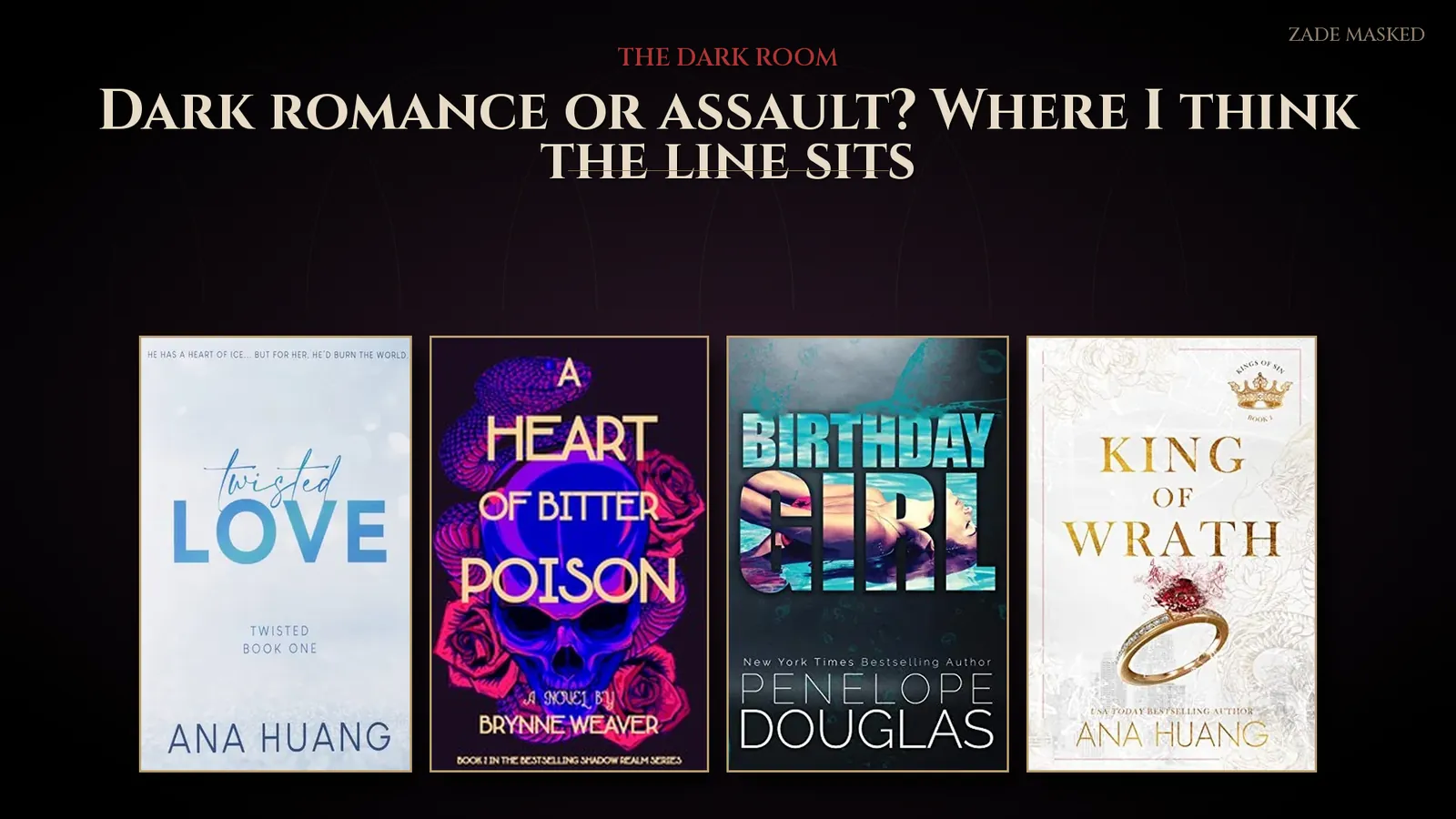
This week everyone is arguing about a scene in The Lament of Autumn, a Chinese period drama. Yu Changxuan has been rejected again by Ye Pingjun. He tells her that since words have failed, he’ll use his body to make her understand. He pins her to a bed and kisses her while she tells him to stop. Then he leaves. (Indiatimes)
Half the comments call it dark romance. The other half call it assault. I think both sides are missing the more useful question.
What happened on screen is assault
I won’t dodge it. She said stop and he carried on. That’s assault in the story, whatever the soundtrack is doing. Calling it dark romance doesn’t change what happened on screen.
Dark romance doesn’t pretend otherwise. It’s a genre where bad things happen, sometimes between the two leads, and the reader knows they’re bad. That’s the whole point of it.
So where’s the line?
For me, the line isn’t what happens. It’s how the story treats it, and whether you were warned.
Does the story know? A good dark romance knows its hero has done something unforgivable. It shows the damage, and the heroine’s fear and anger are real. A bad one treats the assault as proof he loves her, and asks you to swoon. Some viewers of The Lament of Autumn say that’s their problem with it: they feel the scene is framed as romantic.
Did you choose it? Dark romance is fiction read by adults who picked it up knowing what’s inside. Content warnings are what make that a choice. A drama sold as a period romance, with no warning, gives viewers no choice at all. That’s a lot of why the backlash is so loud.
Is it fiction you can put down? Reading something dark isn’t wanting it. Plenty of readers use these books to explore fear, power and control from a safe distance. That’s fine. It stops being fine when the line between the page and real life blurs, and only you know where that is for you.
Not every dark romance crosses it
A lot of readers don’t realise how much of the genre has no sexual assault or non-con at all. The darkness comes from stalking, violence, crime and obsession, with consent on the page. If that’s your line, start here:
And if you want to check a book before you read it, every book page has its warnings up front. You can also browse by warning: non-con, dubcon and sexual assault.
What I’d ask of any story
Warn me. Know what you’re showing. Don’t tell me it’s romantic when it’s harm. If a story does those three things, I’ll follow it a long way into the dark. If it doesn’t, calling it dark romance won’t save it.
FAQ
Is dark romance the same as romanticising assault?
No. Dark romance can include assault, but a good one shows it as harm, and warns readers first. Romanticising is when the story frames it as proof of love.
What is The Lament of Autumn controversy?
In one scene, Yu Changxuan pins Ye Pingjun to a bed and kisses her while she tells him to stop. Viewers are split on whether the drama treats it as romance.
Are there dark romance books without non-con?
Yes, plenty. See the lists of dark romance without non-con and without SA. Every book there still has real darkness.
Where can I check a book’s trigger warnings?
On its book page. Warnings come before the plot, and you can browse the shelf by warning.
On the shelf
The books this essay is standing next to. Notes on those pages are original. The warnings are there before the plot.

Essays are opinion. They are not a substitute for an author’s own warning note. Patreon · Ko-fi · Library